
Managing Cabin Microclimates: The Science of Humidity and Air Quality Inside Your Car
Why Your Car Interior Feels Stuffy and Foggy
Your vehicle has its own cabin microclimate, a small enclosed environment shaped by temperature, humidity, airflow, occupants, and the materials inside it. Unlike a room with continuous natural ventilation, a closed car can accumulate moisture quickly. Two or more passengers exhale warm water vapor, wet shoes transfer moisture from the pavement, coats retain rain, and damp floor mats slowly release humidity long after the drive has begun. The result may be sudden glass condensation, stale air, or a musty smell that seems to return even after the interior has been cleaned.
These symptoms are not merely cosmetic annoyances. A fogged windshield is a visibility hazard, while persistent dampness can encourage microbial growth in carpeting, insulation, and the HVAC evaporator housing. The cabin environment is manageable, however. Much like achieving a reliable fit depends on matching a belt’s width, materials, and buckle to its intended use, clear glass and clean cabin air depend on matching filter media, airflow settings, and moisture habits to the conditions inside the vehicle. A well-chosen HEPA cabin air filter can support that strategy, but filtration works best when paired with disciplined ventilation and moisture control.
The Dynamics of Temperature Shifts and Moisture Buildup
Condensation forms when air reaches its dew point, the temperature at which it can no longer hold all of its water vapor. Vehicle glass is especially vulnerable because it exchanges heat rapidly with the outside environment. On a cold morning, warm humid air from the occupants meets the colder windshield and side windows. The glass surface cools the nearby air, pushing it past the dew point and creating a film of tiny droplets. The same process can occur in summer, although the temperature relationship may be reversed. A strongly cooled cabin can make the inside of the glass colder than the humid air outside, while exterior condensation can form when moist outdoor air contacts glass chilled by the air conditioner.
The water load can be surprisingly large during an ordinary commute. Human respiration continuously adds vapor, and several occupants increase that contribution substantially. Wet footwear, umbrellas, coats, snow, and soaked carpet add liquid water that later evaporates into the cabin. A vehicle parked with damp mats and closed windows effectively becomes a sealed drying chamber, particularly when sunlight warms the interior. Even a small leak around a door seal, windshield, sunroof drain, or HVAC condensate drain can maintain an unusually high humidity level.
- Cold weather: warm breath and wet clothing commonly fog the inside of the glass.
- Hot, humid weather: an overcooled cabin can create condensation on the interior or exterior surface of the windshield.
- Rainy conditions: wet mats and upholstery continue releasing moisture after the rain has stopped.
- Rapid temperature changes: entering a cold or hot vehicle can push the glass and cabin air through different dew point conditions within minutes.
Heating and air conditioning handle moisture differently. Winter heating raises the air temperature, allowing it to hold more vapor, but heat alone does not remove water from the cabin. Moisture must still leave through fresh-air exchange or dehumidification. In summer, the air conditioner cools air across a cold evaporator, causing water vapor to condense on the coil and drain outside the vehicle. That is why the AC can dehumidify even when the cabin does not feel especially cold. If the AC is used with recirculation for too long, though, the system may continue cycling already humid cabin air rather than exporting that moisture.
Evaluating Filter Media for Optimal Microclimate Defense
A cabin filter is not the same as an engine air filter. The engine filter protects combustion components from dirt and debris, while the cabin filter cleans air entering the passenger compartment through the HVAC system. A clogged cabin filter can reduce airflow, increase blower workload, worsen odors, and contribute to weak defrost performance. The basic choice is usually among standard particulate media, activated carbon media, and a more complex multi-stage or HEPA design.
Standard particulate filters are designed to capture common airborne debris such as dust, pollen, and larger particles. They are often the most affordable choice and can provide adequate protection for drivers in relatively clean, dry environments. Activated carbon adds an adsorbent layer that helps capture certain gases, volatile organic compounds, smoke, and odor molecules. It is particularly useful when the cabin smells of traffic fumes, exhaust, tobacco, or mildew, although carbon does not replace particle filtration and eventually becomes saturated.
Multi-stage HEPA filters combine several layers to address different contaminant sizes and types. A typical arrangement may use a coarse pre-filter for larger debris, an electrostatic or fine-particle layer, activated carbon for odors and gases, and a HEPA layer for very small airborne particles. HEPA stands for High-Efficiency Particulate Air, and the HEPA portion is a mechanical filter that forces air through a dense fiber structure. Product claims should be read carefully because test conditions and rating methods vary, but a well-designed HEPA filter can offer substantially finer particle capture than a basic pleated filter. It may help reduce pollen, fine dust, pet dander, and airborne particles, yet it cannot solve a wet evaporator or a water leak by itself.
| Filter type | Primary strength | Important tradeoff |
|---|---|---|
| Standard particulate | Captures dust, pollen, and larger debris | Limited odor and gas control |
| Activated carbon | Reduces selected odors, smoke, and gases | Carbon capacity is finite and it does not replace fine-particle filtration |
| Multi-stage HEPA | Combines fine-particle capture with pre-filtration and odor control | Higher airflow resistance and greater sensitivity to fitment quality |
Fitment deserves as much attention as the media itself. A filter with the wrong dimensions, a flexible frame, or a compressed sealing edge may allow unfiltered air to bypass the filter. A rigid frame, correctly oriented pleats, and a snug perimeter seal help ensure that air passes through the media rather than around it. At the same time, overly restrictive media can reduce vent output and place additional demand on the blower motor. Verify the exact vehicle, model year, trim, and filter location before ordering. Some vehicles use paired filters or unusual installation sequences, so a product that appears similar may still be the wrong choice.
Mastering HVAC Settings and Intake Modes
Recirculation and fresh-air intake serve different purposes. Recirculation is useful when passing through smoke, a dusty construction zone, heavy traffic, or an unpleasant odor because it reduces the amount of contaminated outdoor air entering the cabin. It also allows the HVAC system to cool or heat the cabin more quickly. However, recirculation continuously reuses the moisture produced by occupants, so prolonged use can increase interior humidity and encourage window fogging. Fresh-air mode replaces some cabin air with drier or cleaner outside air, depending on conditions, and is generally the better choice for moisture evacuation.
The AC compressor should not be viewed only as a summer cooling device. In many vehicles, selecting defrost automatically engages the AC system so the evaporator can remove moisture before air reaches the windshield. This dehumidification function remains useful in cool weather. For immediate fog removal, direct airflow toward the glass, select fresh air, and use moderate heat with AC enabled when the vehicle permits it. If condensation is on the exterior, wipers are required; interior fog cannot be solved by wiping the outside surface. Persistent fogging may also indicate dirty glass, a clogged filter, a blocked intake, or a mechanical HVAC problem.
- Use recirculation briefly for smoke, dust, and strong outside odors.
- Switch to fresh air when the cabin feels humid or several occupants are breathing heavily.
- Use defrost with AC enabled to dry air before it reaches the windshield.
- Avoid shutting down immediately after a long AC cycle if the evaporator housing remains damp.
A musty smell that appears when the blower starts often points to microbial growth or trapped moisture around the evaporator box. Leaves and organic debris near the cowl can add nutrients and block drainage, while a damp cabin filter can become an odor source. In the final minutes of a journey, fresh-air operation with the blower running can help exchange humid cabin air and dry accessible parts of the HVAC pathway. This is not a substitute for cleaning a contaminated evaporator or repairing a clogged drain, but it reduces the conditions that allow odors to persist.
A Daily Routine for Pure Air and Mold Prevention
Good cabin air quality is built through repeatable habits rather than occasional deodorizing sprays. Begin with the floor, where moisture often remains hidden under mats and carpet. Rubberized liners with raised edges contain rainwater and melting snow more effectively than low-profile fabric mats, but they still need to be removed, emptied, and dried. Check underneath the liner, particularly after winter driving, because trapped water can remain against the carpet and floorpan for days. If the carpet feels wet without an obvious cause, inspect door seals, windshield edges, sunroof drains, and HVAC condensate drainage.
The outside air intake also needs attention. It is commonly located near the base of the windshield, where leaves, pine needles, pollen, and road debris accumulate. A blocked cowl screen can restrict airflow and direct water into places it should not reach. Clearing debris and checking wiper-trough drains helps maintain a cleaner, more consistent fresh-air supply. A filter replacement cannot compensate for standing water or a blocked intake, just as a durable buckle cannot correct an incorrectly sized belt.
- Control floor moisture. Remove wet mats, dry them fully, and use raised rubber liners during rainy or snowy seasons. Inspect the carpet and underlay for hidden dampness.
- Keep the cowl clear. Remove leaves and debris from the fresh-air intake, then confirm that the wiper-trough drains are open and flowing.
- Dry the HVAC pathway. During the final minutes of a commute, select fresh-air mode and keep the blower operating. In suitable conditions, reduce or switch off cooling shortly before parking while allowing ventilation to continue.
- Replace the cabin filter on schedule. Many manufacturers specify roughly 12,000 to 15,000 miles or about once a year, but dusty roads, heavy pollen, wildfire smoke, pets, and urban traffic may justify more frequent replacement.
Replacement timing should reflect real use rather than a rigid calendar alone. A vehicle driven through rural pollen, construction dust, or city congestion loads a filter faster than one used occasionally in a clean suburban environment. Reduced airflow, a faint whistle from the filter housing, dashboard dust, recurring odors, and fogging that seems disproportionate to passenger moisture are practical warning signs. Inspect the old filter when possible. Heavy gray dust, leaf fragments, oily residue, or visible mold-like contamination indicate that delaying replacement is not worthwhile.
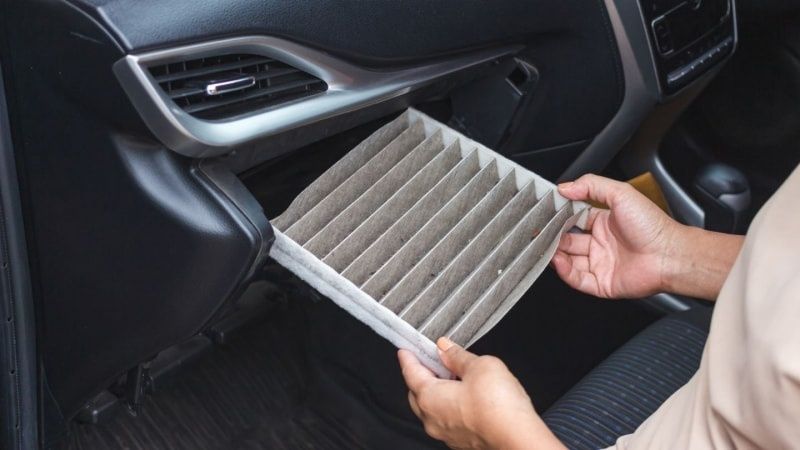
When installing a replacement, turn off the climate system, observe the airflow arrow, and make sure the housing closes without forcing the cover. Examine the frame for warping and confirm that the sealing edge remains continuous. HEPA and carbon options can be valuable for drivers with allergies or odor concerns, but the highest-efficiency media should be selected only when the vehicle’s HVAC system can support the airflow demand. Manufacturer guidance remains the controlling reference, especially for vehicles with paired filters or specialized high-efficiency intake systems.
Take Control of Your Daily Cabin Environment
Clear windows and fresh cabin air come from controlling the complete microclimate. Moisture enters through breath, footwear, wet clothing, rain, and leaks; temperature shifts determine when that moisture becomes condensation; and the HVAC system either removes it or recycles it. Keeping mats dry, maintaining cowl drainage, using fresh-air intake strategically, and allowing the evaporator pathway to dry can prevent many musty odors before they become established.
Pair those habits with a correctly fitted filter selected for the driving environment. Standard particulate media may suit basic needs, activated carbon is useful for odors and traffic fumes, and multi-stage HEPA designs offer stronger fine-particle control when airflow compatibility and fitment are confirmed. With fit, materials, and daily function aligned, the cabin remains more comfortable through seasonal changes, the windshield clears more reliably, and the vehicle’s ventilation system can perform its job without unnecessary strain.