
The Ergonomics of Long-Distance Seating: How to Prevent Highway Spine Strain
The Anatomy of Highway Spine Strain
Long-distance driving is not simply office sitting with a steering wheel. A seated office worker can shift position, stand, change desk height, or let both legs rest evenly. A driver must keep the pelvis anchored, maintain visual control, operate pedals repeatedly, and absorb vibration through the seat and floor. That combination turns a normally passive posture into a constrained, semi-active driving position. The result can be familiar to anyone who has finished a long commute with a stiff lower back, tight hips, aching shoulders, or numbness in the legs.
Road micro-vibrations add another layer of stress. Even when the vehicle feels smooth, continuous input from tires, suspension, pavement joints, and engine movement passes through the seat. Each pedal action also creates small changes in pelvic position and muscle tension. Over several hours, these forces can reinforce lumbar disc compression and fatigue the muscles that normally stabilize the spine. Simply being told to “sit up straight” rarely solves the problem. Rigid posture increases muscular effort and is difficult to maintain when the seat itself places the pelvis, lumbar curve, and steering reach in the wrong relationship. Effective comfort depends on mechanical fit first, followed by regular movement.
Why Long Road Stints Compress the Lumbar Spine
The lower back naturally has a forward curve called lumbar lordosis. When the pelvis rolls backward against a flat or poorly adjusted seat, that curve is reduced. This posterior pelvic tilt often begins subtly: the driver slides forward, the tailbone tucks under, and the upper back rounds to remain visually aligned with the road. As the lumbar curve flattens, the surrounding ligaments and muscles must work differently, while pressure is redistributed across the discs and facet joints. A wallet, phone, bulky belt buckle, or thick clothing beneath one hip can intensify the imbalance by making the pelvis sit unevenly.
Pedal use prevents the lower body from relaxing symmetrically. The right leg repeatedly extends and flexes, while the other leg may remain supported at a different angle. This can increase hamstring tension and encourage the pelvis to rotate or shift toward the active side. Over time, the sacroiliac region may experience asymmetrical torque, especially when the seat is too far away and the driver must reach for the accelerator or brake. A seat that permits a slight knee bend and full back contact reduces the need to brace through the hips.
Circulation also matters. Long periods with the knees bent and the thighs pressing into the seat pan can restrict comfortable blood flow and contribute to stiffness, swelling, and fatigue. The Centers for Disease Control and Prevention guidance on travel-related blood clots notes that prolonged sitting during journeys can reduce movement and increase clot risk, particularly when other medical risk factors are present. This does not mean every long drive is dangerous, but it does reinforce the value of planned movement rather than waiting for discomfort to become severe.
- Keep both feet supported whenever traffic conditions allow, without interfering with pedal control.
- Change pressure points with small, safe weight shifts rather than holding a rigid pose.
- Remove bulky items from rear pockets before driving.
- Plan walking and calf-movement breaks on journeys longer than two hours.
For drivers who want a deeper clinical overview, orthopedic travel guidance also emphasizes the combined effects of prolonged sitting, limited movement, vibration, and inadequate lumbar support. Severe pain, leg weakness, progressive numbness, or pain radiating below the knee should not be treated as an adjustment issue alone. Those symptoms warrant medical assessment.
The 4-Step Seat Adjustment Matrix for Zero-Strain Driving
Seat adjustment works best as a sequence. Changing the steering wheel first can cause the seat position to be compromised later, while adding lumbar support before setting the seat base may place the lower back too far forward. Park safely, remove bulky items from pockets, and make the adjustments before beginning the journey. The goal is not a stiff military posture, but a supported position that allows the spine to retain its natural shape while the arms and legs operate the vehicle without reaching.
- Set the seat pan height and depth. Raise or lower the seat until the hips sit slightly higher than, or close to level with, the knees. The thighs should be supported without the front edge pressing into the crease behind the knees. A useful check is to leave a small clearance between the popliteal area and the seat edge. Move the seat forward until the pedals can be fully depressed with the knees still slightly bent and the back remaining against the backrest. If the seat pan is too deep, the driver may slide forward or experience pressure behind the knees.
- Calibrate the backrest recline. A backrest angle of roughly 100 to 110 degrees is a practical starting range for many drivers. A slight recline helps distribute the upper-body load into the seat instead of forcing the lumbar muscles to hold the torso vertically. The back should remain in contact with the backrest, and the headrest should support the back of the head without pushing it forward. Too much recline, however, encourages reaching for the steering wheel and can reduce control, so the angle must be balanced with wheel reach.
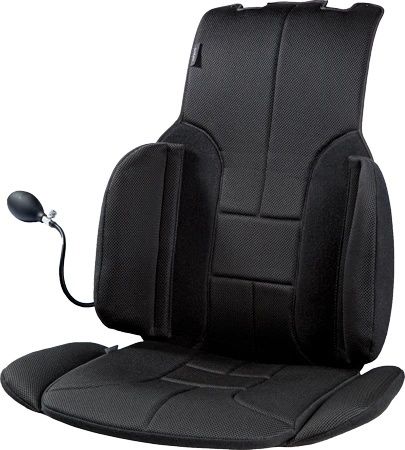
- Place the lumbar apex at the belt-line region. Lumbar support should fill the natural hollow of the lower back, generally near the level of the iliac crest, which is the upper rim of the pelvis. Support placed in the mid-back is too high and can force the rib cage forward. Begin with modest depth and increase it only until the pelvis remains neutral and the lower back feels supported. If the factory adjustment is inadequate, a slim lumbar roll or folded towel can be more effective than a large cushion that pushes the entire torso forward.
- Set the steering wheel for relaxed reach. Bring the wheel toward the driver rather than moving the seat excessively close to the pedals. With the hands near the 9 and 3 o”clock positions, the elbows should remain comfortably flexed, commonly around 20 to 30 degrees, and the shoulders should stay down rather than lifting toward the ears. The wheel should not obstruct visibility or force the wrists into an awkward bend. Mirror placement should allow a broad view without requiring the driver to slump forward.
These settings should be checked again after ten or fifteen minutes on the road. A driver may initially perceive a properly supportive lumbar position as unfamiliar, especially after years of slouching. The correct test is whether the pelvis stays stable, the thighs remain comfortable, and the hands and feet reach their controls without stretching or twisting. Adjustment is not a one-time ritual. Clothing thickness, footwear, vehicle load, and even a different driver can change the final fit.
Small dynamic changes are still necessary. Safe micro-movements include relaxing the grip, gently contracting and releasing the glutes, changing foot pressure when not operating a pedal, and taking a few deeper breaths without losing visual attention. Never stretch away from the controls or move in a way that compromises steering. On longer trips, stopping every 60 to 90 minutes for at least five minutes of walking and light mobility is a more reliable strategy than trying to maintain one perfect posture.
Customizing Ergonomics for Short, Average, and Tall Drivers
There is no universal seat position because a vehicle is designed around a range of body dimensions, not one fixed driver. Shorter drivers often move the seat forward and raise it to improve pedal reach and visibility, but this can create excessive knee flexion or bring the head too close to the roof. Taller drivers face the opposite problem: moving the seat back may improve legroom while leaving the steering wheel too distant, and lowering the seat can reduce visibility. The correct setup preserves clearance, support, and control simultaneously.
| Driver profile | Primary challenge | Useful starting adjustment | What to verify |
|---|---|---|---|
| Short | Pedal reach and forward visibility | Raise the seat, use modest cushion tilt, and consider approved pedal extensions | Knees remain bent, thighs are not pinched, and the airbag and wheel relationship remains safe |
| Average | Balancing support and control | Use a 100 to 110 degree recline with moderate lumbar depth | Back contact is maintained without shoulder elevation or forward reach |
| Tall | Headroom, legroom, and steering reach | Maximize seat travel, use a supportive pan tilt, and bring the wheel toward the torso | Clearance above the head, relaxed knees, and no pressure behind the thighs |
Shorter drivers should avoid solving pedal reach by sitting on a thick, unstable cushion that changes the relationship to the headrest and restraint system. A thin, firm wedge may help adjust pelvic angle, but any accessory must remain secure and must not interfere with seat-mounted airbags. Approved pedal extensions can be useful in specialized applications, yet they should be professionally fitted. Raising the seat can improve the sight line, while a slight rearward cushion slope may prevent the thighs from being compressed against the steering column area.
Tall drivers should prioritize headroom and knee clearance before chasing an upright appearance. A seat pan with adequate length can support the thighs without forcing pressure behind the knees, and a moderate upward tilt at the front can reduce the sensation of unsupported legs. The steering column should be extended toward the driver if possible, allowing the seat to remain far enough back for hip and knee comfort. Fleet operators should involve drivers in vehicle evaluations, because a seat that suits an average-height user may create daily strain for someone at either end of the stature range.
Evaluating Seat Materials, High-Density Cushions, and Lumbar Rolls
Seat material affects both pressure distribution and vibration exposure. High-density molded memory foam can contour around the pelvis and reduce sharp pressure points, but very soft foam may allow the driver to sink into posterior pelvic tilt. Firm polyurethane inserts provide a more stable base and usually retain their shape well, although an overly hard cushion can transmit road vibration and create localized discomfort. The best construction is often layered: a stable, durable support core combined with a thinner comfort layer that distributes load without allowing excessive collapse.
Breathability becomes increasingly important on long hauls. Perforated fabric, mesh panels, and ventilated synthetic upholstery can reduce heat and moisture buildup, helping the driver remain comfortable without constantly shifting. Leather offers durability and easy cleaning, but non-ventilated leather can trap heat against the back and thighs. Material choice should therefore reflect the environment, not appearance alone. A commercial driver who spends eight hours in the seat may benefit more from ventilation and abrasion resistance than from a premium surface that feels hot after midday.
- Memory foam: useful for pressure distribution and comfort, provided it has enough density to resist bottoming out.
- Firm polyurethane: reliable for stable pelvic positioning and long-term shape retention, but it needs adequate vibration isolation.
- Breathable fabric or mesh: practical for warm conditions and repeated daily use.
- Leather: durable and easy to wipe clean, though ventilation should be considered for long journeys.
- Lumbar roll: effective when it matches the lower-back hollow and does not force the torso too far forward.
Aftermarket wedge cushions can correct a seat pan that slopes backward and encourages the pelvis to tuck under. Choose a firm, non-slipping design with a moderate thickness rather than the tallest option available. A lumbar roll should be positioned at the belt-line region, then tested for ten minutes before committing to a long trip. If it creates pressure, numbness, or a feeling of being pushed away from the backrest, it is too large or too high. A rolled towel is useful for testing the location before buying a permanent support.
Vehicle maintenance is part of seat ergonomics. Correct tire inflation, functioning suspension components, and an intact seat base can reduce unnecessary vibration. A damaged cushion, collapsed foam, or loose seat rail should be reported rather than disguised with multiple layers of padding. Professional driving programs can use route length, stop frequency, and vehicle condition to identify assignments that expose drivers to prolonged static loading. Ergonomics is not merely a personal preference; it is an equipment-fit and operational-safety issue.
Reclaim Your Commute with Smarter Cockpit Mechanics
Highway comfort comes from combining a well-fitted cockpit with controlled movement. Set the seat base first, establish the backrest angle, place lumbar support at the pelvis rather than the mid-back, and bring the steering wheel close enough to keep the shoulders relaxed. Then interrupt the static load. A five-minute stop every 60 to 90 minutes can include walking, gentle calf raises, hip-flexor movement, and easy hamstring mobility. Drivers at elevated risk of blood clots should discuss travel precautions with a healthcare professional, especially when journeys exceed four hours.
- Recheck the seat before every long journey, particularly when changing vehicles.
- Keep the pelvis level and remove wallets or bulky objects from rear pockets.
- Use dynamic posture shifts rather than forcing one rigid “perfect” position.
- Inspect cushions, lumbar supports, upholstery, and seat rails for wear.
- Take five minutes before the next road trip to recalibrate the entire seat base and steering reach.
The most useful mental shift is to treat the vehicle cockpit as a high-performance ergonomic workspace. Fit comes first: the seat should support the pelvis, preserve the lumbar curve, absorb reasonable vibration, and place every control within relaxed reach. When those mechanical details are correct, posture requires less willpower and driving becomes less physically expensive. Persistent or worsening pain still deserves professional evaluation, but for everyday stiffness and fatigue, a precise seat setup and dependable movement schedule provide a practical place to start.