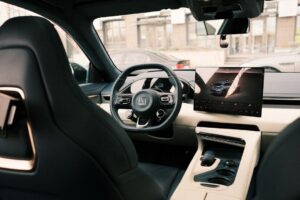
The Psychology of Cabin Decluttering: How a Minimalist Dashboard Sharpens Driving Focus
Why Visual Noise in the Cabin Steals Driving Focus
A vehicle cabin is an operational workspace, not a mobile storage locker. Every surface has a job: the windshield preserves forward visibility, the dashboard supports instruments and controls, the center console houses frequently used functions, and the passenger compartment keeps occupants and cargo secure. When receipts, bottles, cables, clothing, and decorative accessories spread across those zones, the cabin becomes harder to read and use. The same principle applies to any functional accessory: clean lines, secure hold, and a dependable fit matter more than decorative excess.
Driving already requires continuous perception, judgment, and motor control. You must monitor lane position, mirrors, traffic signals, pedestrians, cyclists, road markings, and changing vehicle speeds while anticipating what other road users may do next. Visual clutter competes with that work, even when it is only noticed at the edge of vision. Cognitive ergonomics examines how environments either support or burden human attention, and a well-organized cockpit applies that discipline in practical form. A clearer cabin reduces avoidable decisions and helps preserve attention for sudden braking, merging traffic, or an unexpected obstruction.
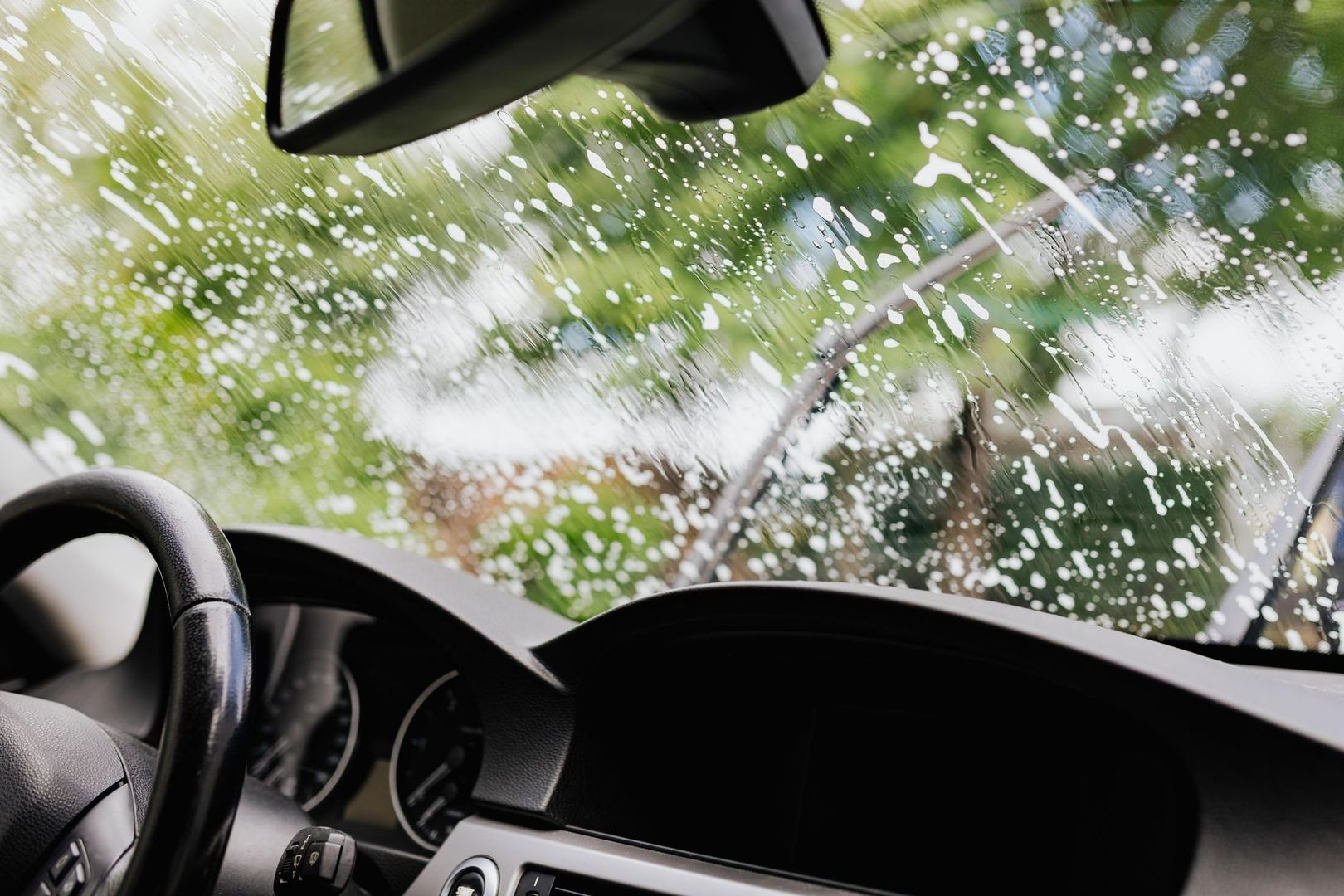
The Cognitive Ergonomics of a Clear Windshield and Dash
Cognitive load can be understood as the mental effort required to perform a task. Some of that effort is intrinsic to driving. Reading a complex intersection, judging a narrowing gap, or responding to a vehicle braking ahead cannot be removed. Extraneous load, however, comes from the way information is presented. A glossy object reflected in the windshield, a parking slip fluttering near the instrument cluster, or an air freshener bobbing in peripheral vision adds information that has no value for the driving task.
That extra information may create only a momentary distraction, but driving is built from thousands of such moments. A driver does not need to stare directly at a loose object for it to consume attention. Peripheral motion can trigger an orienting response, while a bright reflection can make the eyes briefly question whether it represents a real hazard. Peer-reviewed research available through the National Library of Medicine research archive illustrates why competing visual stimuli matter when perceptual resources are limited. The source should be read for its own methods and findings, but the practical lesson is straightforward: remove unnecessary signals from the visual field.
Long commutes make this especially important. Background clutter may not cause one obvious error, yet repeatedly sorting relevant from irrelevant details can contribute to mental fatigue. By the final third of a journey, a tired driver may have less spare attention for a lane change or a rapidly developing traffic problem. A minimalist dashboard is therefore not merely an aesthetic preference. It helps keep the visual environment aligned with the task.
- Keep the windshield, instrument cluster, and forward dashboard free of loose objects.
- Remove shiny surfaces that reflect sunlight toward the driver or windshield.
- Secure cables, coins, access cards, and other small items so they cannot move during braking.
- Choose accessories that stay fixed, remain matte, and do not obstruct displays or sightlines.
Loose Objects and Reaction Time Delays
Unsecured objects create both physical and cognitive risks. During hard braking, a phone, travel mug, notebook, or parking card can slide across a dashboard or console tray. A bottle may roll under a pedal area, while a heavy object can become a projectile if the vehicle stops abruptly. Even lighter items can interfere with controls, block a warning display, or create a sudden noise that causes the driver to look away from the road.
The more subtle problem is attentional switching. If an item moves at the edge of vision, the driver may spend a fraction of a second deciding whether it is a road hazard. If it lands near a footwell, the driver may be tempted to retrieve it. That response shifts visual attention, working memory, and sometimes hand movement away from traffic. In a dense urban environment, a small delay can mean missing the first brake-light change in a queue or failing to notice a pedestrian entering a crossing.
Federal guidance from the National Highway Traffic Safety Administration describes distracted driving as a serious safety problem and emphasizes that attention diverted from driving increases crash risk. The key takeaway is not that every loose item causes a collision, but that unnecessary distractions reduce the margin available for error. A two-second glance at a moving object can be consequential when traffic is changing quickly, so items should be secured before the vehicle moves.
- Remove anything that can roll, slide, bounce, or fall into a control area.
- Use a closed compartment for small objects rather than an open tray.
- Place drinks in holders designed for the container size, and never use a dashboard as a drink surface.
- Stop in a safe location before adjusting, retrieving, or reorganizing anything.
Evaluating Cockpit Storage and Organizing Solutions
Storage accessories should be judged as functional equipment, not simply by how much they can hold. A good organizer has a secure fit, resists movement, and makes its contents quiet. Silicone center console organizers are useful for separating coins, access cards, sunglasses, and charging adapters because the material can provide grip and reduce rattling. Their weakness is overfilling. When a tray becomes a deep collection of miscellaneous items, it may conceal clutter rather than solve it.
Matte sun visor caddies can store documents, fuel cards, or a small maintenance record, but they require careful placement. Anything attached to a visor should remain lightweight and should not obstruct the driver”s view when the visor is lowered. Concealed seatback pockets are often better for rear-cabin supplies, emergency documentation, or family items that do not need to be reached while driving. They keep the dashboard visually clean, although loose contents can still rattle unless the pocket is divided or the items are placed in soft pouches.
| Storage option | Strength | Trade-off | Best use |
|---|---|---|---|
| Silicone console organizer | Grip, separation, and reduced rattling | Open access can encourage overfilling | Small daily essentials |
| Matte visor caddy | Keeps documents together and away from the dash | Can affect visor clearance or visibility if overloaded | Lightweight cards and paperwork |
| Concealed seatback pocket | Visual concealment and useful capacity | Contents are less accessible from the driver”s seat | Passenger supplies and stored documents |
| Closed glove box | Strong visual control and protection from sunlight | Items can become difficult to locate if not categorized | Essential vehicle documentation |
Material quality matters as much as layout. Soft-touch surfaces can prevent the tapping and buzzing produced by hard plastic items, while stitched or reinforced organizers are more likely to retain their shape over time. Choose function before flair. An accessory that looks sleek but slides under braking is a poor fit, just as a belt that looks attractive but cannot hold its position is the wrong choice for daily wear. Storage should be tactilely predictable, visually quiet, and firmly compatible with the vehicle”s existing surfaces.
Engineering a Four-Step Minimalist Cabin Routine
A reliable routine prevents the vehicle from returning to its old condition. The objective is not an empty cabin at all times. The objective is to ensure that every item has a defined purpose, location, and level of accessibility. Emergency equipment belongs in the vehicle, but it does not need to occupy the driver”s immediate visual field. Daily objects should be easy to remove, while seasonal gear should be compact, secured, and reviewed when conditions change.
- Evacuate the cabin completely. Remove personal effects, rubbish, reusable shopping bags, paperwork, loose coins, cables, decorative items, and anything sitting on the dashboard. Empty the console, cup holders, door pockets, glove box, and seatback storage. This total reset reveals how much space is being used by items that do not genuinely belong in the car.
- Create clear zones. Separate essential driver tools, passenger supplies, emergency equipment, and items that should return to the home. Essential tools might include a required access card, sunglasses, or vehicle documents. Seasonal emergency gear, first-aid supplies, and other preparedness items should be stored securely outside the forward visual zone. A compact trash container can prevent wrappers and receipts from becoming permanent cabin clutter.
- Reduce glare and visual movement. Wipe the windshield and dashboard, remove glossy dashboard ornaments, and inspect whether phone mounts, cables, or air fresheners reflect light or move while driving. Use matte, non-reflective surfaces where possible. Any phone holder must preserve visibility and should be adjusted before departure, never while the vehicle is moving.
- Perform a zero-reset at every destination. Before leaving the car, remove rubbish, take indoor items with you, return documents to their compartment, and check the footwells. This small habit takes less time than a monthly recovery session. It also makes the cabin predictable, so the next commute begins with a clear workspace rather than a fresh round of sorting.
Organization should also extend to the trunk, where emergency supplies, first-aid materials, spare clothing, and compact cargo restraints can be kept out of the passenger compartment. The trunk should remain sufficiently clear for temporary loads, and its contents should be reviewed as household needs change. A well-zoned vehicle balances readiness with restraint. It does not sacrifice useful equipment; it places that equipment where it cannot compete with the driver”s immediate task.
Finally, test the arrangement under realistic conditions while parked. Open and close the glove box, adjust the seat, check the mirrors, and confirm that no organizer interferes with a seat belt, airbag area, pedal, control, or visibility. Fit comes first. If an accessory shifts, blocks a display, or requires awkward reaching, replace it or relocate it. The best system is one that works without conscious effort.
Transform Your Vehicle into a Low-Stress Driving Sanctuary
A streamlined dashboard returns mental bandwidth to the activity that needs it most. Removing reflections, motion, noise, and loose objects makes the visual field easier to interpret and reduces the number of small decisions competing with traffic awareness. The result is not dramatic theatrical calm; it is a series of practical improvements that preserve attention during an ordinary commute and provide more margin when conditions change suddenly.
Cabin order also supports nervous-system calm because predictability reduces unnecessary monitoring. Before the next daily drive, clear every surface, secure every loose item, and assign a location to the essentials. Keep emergency gear available but concealed, choose storage with a secure fit and quiet materials, and finish each journey with a zero-reset. A vehicle designed as a focused cockpit feels less like a storage locker and more like dependable equipment, ready for the road without demanding attention from the person operating it.