
Combating Chronic Road Vibration: How Suspension Geometry Protects the Body
The Invisible Highway Toll on Your Spine and Muscles
Long-distance driving rarely injures the body through one dramatic impact. The more common problem is accumulation. Every expansion joint, coarse asphalt texture, patched pothole, and uneven lane surface sends a small disturbance through the tire, wheel, suspension, seat, and finally the driver. Individually, these movements may feel insignificant. Repeated for hours, they create a persistent mechanical workload for the muscles that stabilize the pelvis, lower back, shoulders, and neck.
This is the practical meaning of Whole-Body Vibration, or WBV. The body is exposed to repeated vertical, longitudinal, and lateral acceleration, while the driver must maintain posture and precise control. A lumbar pillow may fill a gap behind the lower back, but it cannot remove the vibration entering through the seat base or prevent the pelvis from receiving repeated micro-shocks. Occupational health guidance collected through CDC vibration research describes why sustained whole-body vibration is associated with spinal loading and muscular fatigue. Effective protection therefore depends on a connected mechanical chain: the tire first filters sharp road inputs, suspension geometry controls wheel movement, dampers suppress residual oscillation, and resilient seat foam supports the body without bottoming out.
The First Line of Defense in Tire Sidewall Deflection and Wheel Dynamics
The tire is not merely a contact patch or a replaceable consumable. It is the first spring in the vehicle’s vertical compliance system. Air pressure, sidewall height, carcass construction, tread design, and the mass of the wheel determine how much road energy is absorbed before it reaches the suspension. A pneumatic tire behaves, in broad terms, like a low-pass filter. It can soften many high-frequency irregularities, particularly small surface chatter that would otherwise reach the wheel and suspension with unnecessary sharpness.
Wheel and tire selection changes that filtering effect considerably. A taller sidewall generally permits more controlled deflection than an ultra-low-profile tire, although the result depends on inflation pressure, carcass stiffness, load, and compound. A larger wheel with a short sidewall may improve steering response and visual appeal, but it usually provides less vertical compliance. Run-flat systems introduce another tradeoff. Reinforced self-supporting sidewalls or internal support inserts are designed to carry a vehicle after pressure loss, yet those structures can increase stiffness and alter the way force is transmitted during normal operation.
Simulation work archived by VTechWorks Home examined self-supporting and insert-supported run-flat designs, including their structural, thermal, fatigue, contact-patch, and rolling-resistance behavior. The study is not a universal ranking of tire comfort, but it illustrates an important engineering principle: internal compliance and reinforcement placement affect the complete force path. A tire designed primarily for puncture mobility may not filter fine road vibration in the same way as a more flexible conventional pneumatic tire.
- Sidewall profile: Taller sidewalls generally offer more room for controlled deflection, provided pressure and load are correctly matched.
- Construction: Reinforced carcasses can improve durability and puncture mobility while transmitting more impact energy.
- Inflation: Underinflation can damage handling and heat control, while excessive pressure can make the tire feel harsh and reduce its filtering ability.
- Wheel mass: Heavy wheels increase unsprung mass, making it harder for the suspension to control rapid wheel movement.
Suspension Geometry and Multi-Link Articulation at Work
After the tire, suspension geometry determines whether an impact remains primarily vertical or becomes a compound disturbance. A MacPherson strut is compact and cost-effective, but the strut, steering axis, lower arm, and body attachment must manage spring movement, steering forces, and wheel-location duties together. A double-wishbone layout separates more of those functions, allowing engineers to tune camber, caster, roll center, and wheel travel with greater freedom. Multi-link systems add further control points, which can help isolate longitudinal impact forces from lateral body motion when the geometry and bushings are properly calibrated.
The key is not simply the number of links. Each architecture must control the wheel through bump and rebound while limiting unwanted toe change, camber change, and steering kickback. When a wheel strikes a sharp edge, a well-managed suspension directs the force along intended paths and allows the wheel to move upward without producing excessive lateral cabin shudder. Poorly controlled geometry can turn the same impact into a combination of vertical jolt, fore-and-aft movement, steering disturbance, and side-to-side shake. That compound motion is particularly tiring because the torso must continually correct itself in several directions.
Dampers complete the system by controlling the rate of movement rather than simply resisting it uniformly. Progressive damping can permit initial compliance over small irregularities, then provide greater control as suspension velocity and travel increase. Bushings also matter. They must isolate noise and high-frequency vibration without allowing excessive wheel movement under braking, cornering, or acceleration. Research and practical reports on full-suspension systems, including adjustable air or coil damping and progressive travel, reinforce the broader lesson that impact absorption depends on coordinated springing, damping, and kinematics rather than one soft component.
| Suspension architecture | Primary strength | Potential comfort tradeoff |
|---|---|---|
| MacPherson strut | Compact packaging and efficient manufacturing | Fewer independent tuning paths for wheel control |
| Double wishbone | Strong control of camber and wheel travel | More components and packaging demands |
| Multi-link | Extensive separation of ride, handling, and longitudinal-force tuning | More bushings, joints, weight, and maintenance points |
Why Seat Foam Density and Viscoelastic Response Make or Break Spinal Health
The seat is the final mechanical interface between the vehicle and the body, so a comfortable surface is not necessarily a protective one. Slow-recovery memory foam is viscoelastic polyurethane that softens with heat and responds gradually to pressure. That behavior can feel pleasant at first, but it may become less predictable during long drives. Cabin temperatures can change substantially between winter starts, summer sun exposure, and prolonged operation. Heat may make the material feel excessively soft, while cold can make it noticeably firmer and slower to recover.
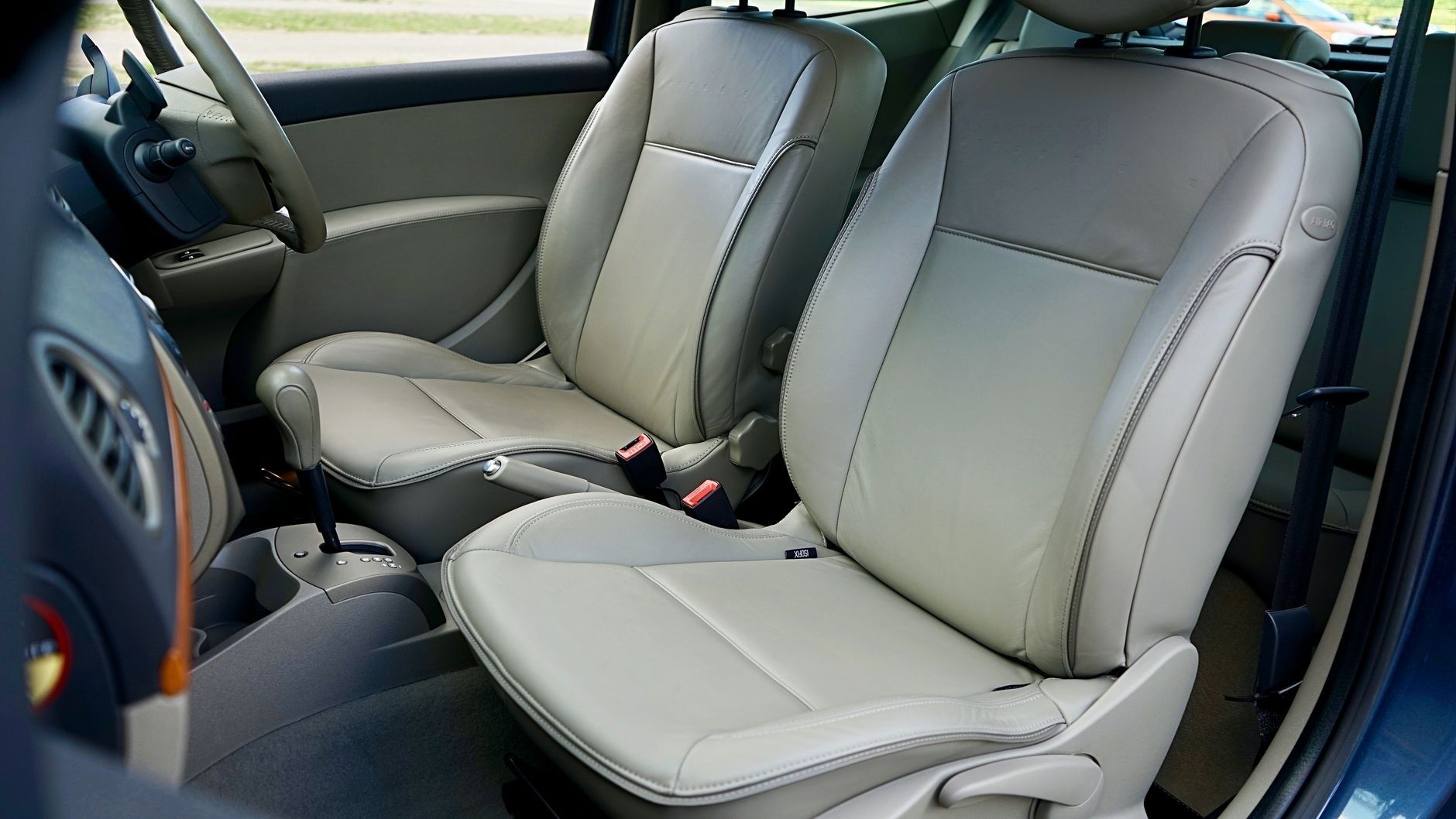
Slow rebound also matters when the driver shifts position, brakes, turns, or encounters repeated impacts. If the foam remains compressed beneath the pelvis, it can reduce support precisely when posture needs to be restored. The problem is not that memory foam is always unsuitable. Rather, it should not be assumed that a soft, pressure-relieving surface automatically offers good dynamic vibration control. A cushion that absorbs body heat, retains moisture, or recovers slowly may provide less dependable support in a vehicle than its showroom feel suggests.
High-resilience open-cell microcellular foam offers a different design approach. Such formulations can be engineered for resilience, low compression set, dimensional stability, and shock or vibration absorption across a broader temperature range. Seating materials commonly use densities in the approximate range of 3 to 5 pounds per cubic foot, but density alone does not determine quality. Foam chemistry, cell structure, thickness, contour, and the driver’s body mass all affect performance. The ideal seat uses progressive support: softer initial compliance for small vibration, followed by firmer resistance as the pelvis approaches the base of the cushion.
- Resilience: The cushion should return quickly enough to support posture after each movement.
- Compression set: Low permanent deformation helps the seat retain its original support over years of use.
- Temperature stability: Performance should remain consistent across realistic winter and summer cabin conditions.
- Progressive firmness: The foam should absorb small inputs without allowing the pelvis to bottom out during larger or repeated impacts.
- Cover construction: A breathable, durable, and moisture-resistant cover improves long-term usability without replacing the need for suitable foam.
Practical Checklist for Optimizing Your Vehicle Ergonomic Shield
A comfortable vehicle should be assessed as a complete system rather than judged by one accessory. Begin at the road surface, then inspect the wheel, tire, suspension, and seat in that order. A soft cushion cannot compensate for a tire that is overinflated, a damper that has lost control, or a bushing that allows excessive wheel movement. Conversely, excellent suspension cannot fully protect the body if the seat has collapsed beneath the driver’s weight.
- Choose the wheel and tire package carefully. Favor a compliant sidewall profile when ride comfort and long-distance stamina matter more than maximum steering sharpness. Keep the tire at the manufacturer’s recommended pressure and avoid selecting a wheel size solely for appearance.
- Check for damper deterioration. Repeated bouncing after a bump, nose-diving under braking, uneven tire wear, fluid leakage, or a vague feeling over undulating roads can indicate reduced damping control.
- Inspect bushings and joints. Clunks, wandering, steering kickback, irregular alignment changes, and increased vibration may indicate worn isolation components or loosened suspension hardware.
- Evaluate the seat dynamically. Sit in the driving position for an extended period, check whether the pelvis remains level, and confirm that the cushion supports the thighs without forcing excessive pressure behind the knees.
- Assess aftermarket cushions by material, not softness. Look for cellular structure, density information, compression-set performance, resilience, temperature behavior, and a cover that can withstand regular use.
Seat position remains part of the mechanical solution. The hips should sit sufficiently far back to use the seatback’s support, while the steering wheel should be close enough to avoid reaching with the shoulders. Excessive recline, a seat base tilted too far upward, or a steering wheel positioned too far away can increase muscular effort even when the chassis is well tuned. Fit comes first, just as it does when selecting any product intended for daily wear and sustained support.
Engineer Your Ride to Reclaim Physical Stamina
Protection from chronic road vibration begins where the vehicle meets the pavement. A properly selected pneumatic tire absorbs the smallest, fastest disturbances. Suspension geometry then guides wheel movement and separates vertical impact from lateral and longitudinal forces. Springs and dampers control the remaining energy, while bushings prevent unnecessary vibration from entering the body structure. Finally, high-resilience seat foam distributes pressure, recovers between impacts, and provides progressive resistance before the pelvis reaches the seat base.
For daily commuting and road trips, the most practical strategy is to preserve the entire chain. Choose a tire and wheel package with useful sidewall compliance, maintain correct pressures, replace worn dampers and bushings before symptoms become severe, and select seating foam for resilient dynamic support rather than showroom softness. These choices will not eliminate every road input, and persistent pain should be evaluated by a qualified health professional, but they can reduce the avoidable workload imposed on the body. A well-engineered chassis and a properly specified seat are not cosmetic upgrades. Together, they are a long-term investment in control, comfort, and physical stamina.